About RCRC

Milestones

2022
  • Royal Commission for Riyadh City announced a partnership with Aldenham Education Group; bringing one of the oldest British schools to Riyadh.
  • Royal Commission for Riyadh City announced the opening of Singapore’s One World International School in Riyadh.
  • Royal Commission for Riyadh City announced the opening of the British Downe House International School in Riyadh.
2021
  • As part of the «Riyadh Art» program, Royal Commission for Riyadh City launched the «Noor Riyadh» Festival at 13 locations in the capital.
  • lifting the development and trading suspension on large areas in northern Riyadh.
  • CustoRoyal Commission for Riyadh City announced the opening of the UK-based King’s College School – in Riyadh.dian of the Two Holy Mosques King Salman Bin Abdulaziz launched 4 mega projects in Riyadh including King Salman Park, Green Riyadh, Sports Boulevard, and Riyadh Art.
  • Ministry of Investment and the Royal Commission for Riyadh City announced their partnership with SEK Education Group to open SEK International School in Riyadh.
  • Royal Commission for Riyadh City launched the Riyadh Sustainability Strategy.
  • 44 multinational companies choose to open regional headquarters in Riyadh within the Royal Commission for Riyadh City’s Regional Headquarters Attraction Program.
  • Royal Commission for Riyadh City submitted the Kingdom’s file to organize the World Expo 2030 in Riyadh.
2020
  • Royal Commission for Riyadh City received the Certificate of Satisfactory Implementation of the U4SSC KPIs for Smart Sustainable Cities awarded to the City of Riyadh by the United Nations United for Smart Sustainable Cities (U4SSC) initiative.
  • Green Riyadh’s afforestation works kicked off.
  • Royal Commission for Riyadh City announced the completion of the Wadi Hanifa Urban Code and all relevant procedures.
2019
  • Royal Commission for Riyadh City launched the Riyadh Geo-information platform.
  • Custodian of the Two Holy Mosques King Salman Bin Abdulaziz launched 4 mega projects in Riyadh including King Salman Park, Green Riyadh, Sports Boulevard, and Riyadh Art.
  • The World Council of Cities Data (WCCD) named Riyadh as the “local 2030 data hub”.
  • Royal Commission for Riyadh City inaugurated Qaisaryat Al-Kitab (Book Bazaar) in the Qasr Al-Hukm area.
2018
  • Opening of Riyadh Public Transit Visitor Centre.
  • Opening of Turaif neighborhood in historical Diriyah.
2017
  • Royal Commission for Riyadh City inaugurated Namar ‎Lakeside Park and the environmental rehabilitation ‎project of three valleys (Obeir, Al-Mahdiya, and Al-Batha).
  • Approval of the outputs of the comprehensive plan to achieve the concept of Riyadh as a smart city.
  • Completion of tunnel boring works in the Riyadh Metro project.
2015
  • The launch of Riyadh Metro’s tunnel boring machines.
  • King Salman inaugurated the Al-Bujairi quarter development project, which is part of the development program of historical Diriyah.
  • Launch of a series of Environmental and Recreational projects at Al-Thumamah Park.
  • Preparation of a Comprehensive Plan for flood drainage in Riyadh up to 1470 Hijri.
2013
  • Awarding of the King Abdulaziz Project for Riyadh Public Transport (Metro – buses).
  • Royal Commission for Riyadh City inaugurated the Abu Bakr Al-Siddiq & Al-Oruba Roads extension project across King Salman Airbase and opened the tunnel at the intersection of King Abdulaziz Road with Al-Oruba Road.
  • Approval of the Coordination Plan for the Provision of Public Utilities in Riyadh City.
2012
  • Royal Commission for Riyadh City inaugurated the Wadi Namar and Wadi Laban Environmental Rehabilitation project.
2011
  • Royal Commission for Riyadh City approved a comprehensive strategy for preserving vegetation in Riyadh Province.
  • Royal Commission for Riyadh City inaugurated the 1st phase of the King Abdullah Road Development Project (from its intersection with Prince Turki Bin Abdulaziz Al-Awwal Road to its intersection with King Abdulaziz Road).
2010
  • Royal Commission for Riyadh City launched the Wadi Hanifa Environmental Rehabilitation Project (80 km long).
  • Aga Khan International Award for Architecture on Environmental Rehabilitation Project of Wadi Hanifa was awarded to Royal Commission for Riyadh City.
  • Royal Commission for Riyadh City launched King Salman Square in Diriyah, which had the fifth-largest flag in the world at that time.
  • The Foundation stone was laid for the first phase of the King Salman Science Oasis project.
  • Approval of the plan to rehabilitate Wadi Al-Sulay (103 km in length).
2009
  • Royal Commission for Riyadh City approved the formation of the High Committee for Transport in Riyadh.
2008
  • Riyadh Website won the Best Arabic Website Competition Award.
  • The death rate and serious injuries in Riyadh city witness a decrease after the implementation of the Traffic Safety Strategy.
  • Royal Commission for Riyadh City commenced work on the Criminal Court Complex project.
  • Royal Commission for Riyadh City developed a comprehensive plan for water reuse in Wadi Hanifa.
  • Royal Commission for Riyadh City approved the Tourist Urban Plan for the area of Al-Thumamah.
2007
  • Royal Commission for Riyadh City approved the executive plan for environmental protection in Riyadh city, which includes 50 environmental programs covering several axes including pollution, waste, water resources, natural resources, open areas, wildlife, and environmental management.
  • Royal Commission for Riyadh City approved amendments to the building regulations of the area located between King Fahad Road and Al-Olaya Street.
2005
  • Royal Commission for Riyadh City opened Al-Watan Park at King Abdulaziz Historical Center.
  • Royal Commission for Riyadh City opened the Sheikh Mohammed Bin Ibrahim Al Asheikh Mosque, Souq Al-Zall Development Project, and Dukhnah Square in the Qasr Al-Hukm area.
2003
  • Royal Commission for Riyadh City won the King Abdullah II Award for Creativity for the King Abdulaziz Historical Center.
  • Royal Commission for Riyadh City commenced works on the Wadi Hanifa Environmental Rehabilitation Project.
  • Royal Commission for Riyadh City completed the implementation of the Salam Park project over a total area of 312,000 square meters. The project houses a large artificial lake with an area of 33000 square meters.
  • Royal Commission for Riyadh City completed the preparations for the Metropolitan Development Strategy for Riyadh City.
  • Royal Commission for Riyadh City formed the High Committee for Traffic Safety in Riyadh City.
  • Royal Commission for Riyadh City opened the first phase of the Development Program of Al-Thumamah park.
2002
  • Royal Commission for Riyadh City approved the plan for the development of Wadi Hanifa.
  • Royal Commission for Riyadh City won the Waterfront Center Award, Washington (the Comprehensive Plan for the development of Wadi Hanifa).
  • Royal Commission for Riyadh City issued the base digital map of the city of Riyadh.
2001
  • The Qasr Al-Hukm plazas were chosen among the world’s best plazas.
2000
  • Royal Commission for Riyadh City launched the High Court Building Project, as part of the program for the development of the Qasr Al-Hukm area.
1999
  • Royal Commission for Riyadh City commenced the implementation of the Historical Diriyah Development Program.
1998
  • Royal Commission for Riyadh City inaugurated the King Abdulaziz Historical Center in the Al-Murabba quarter over an area of 360,000 square meters to mark the 100th anniversary of the KSA foundation.
1994
  • Royal Commission for Riyadh City won Aga Khan Award for Architecture on the Imam Turki Bin Abdullah Mosque development project.
  • Royal Commission for Riyadh City developed a Comprehensive Strategy for the Development of Wadi Hanifa.
1991
  • Royal Commission for Riyadh City launched the second phase of its program for the development of the Qasr Al-Hukm area, including Prince Turki Bin Abdullah Mosque, Qasr Al-Hukm Palace, Al-Adl Square, Safat Square, Imam Muhammad Bin Saud Square, Al-Masmak Square, Al-Thumairi Gate, Dukhnah Gate, Deira Tower, parts of old city walls, as well as Al-Muaiqliyah Commercial Center.
1990
  • Royal Commission for Riyadh City opened the development project of the central section of King Fahd Road, extending for ‎5.1 km from Al-Maather Street to Asir Street.
1989
  • Royal Commission for Riyadh City won‎ Aga Khan International Award for Architecture on Diplomatic Quarter Project.
1988
  • Royal Commission for Riyadh City adopted a program to control the problem of high groundwater levels in Riyadh.
1987
  • Royal Commission for Riyadh City commenced the actual operation of the Urban Information System in the city.
  • Royal Commission for Riyadh City commenced works on the second phase of the Qasr Al-Hukm Area Development Program.
1986
  • Royal Commission for Riyadh City conducted the first study of land uses in Riyadh city.
  • The supervisory and metropolitan responsibilities of the Royal Commission for Riyadh City were extended to include Wadi Hanifa valley, and the issuance of regulations and procedures to stop the valley’s environmental deterioration.
1984
  • Royal Commission for Riyadh City launched the first phase of its program for the development of the Qasr Al-Hukm area, which included the headquarters of the principality of Riyadh Province, Riyadh Municipality, and Riyadh Province Police Center.
  • Royal Commission for Riyadh City commenced the development of the Urban Information System in Riyadh.
1982
  • Royal Commission for Riyadh City commenced works on Qasr Al-Hukm Area Development Program.
1980
  • Issuing the second master plan for the city of Riyadh.
1979
  • Opening of the Diplomatic Quarter project on an area of 7 million square meters.
1974
  • Royal Commission for Riyadh City launched its first project in Riyadh: The Housing Complex for the Staff of the Ministry of Foreign Affairs
  • Royal Commission for Riyadh City commenced development works on the Diplomatic Quarter.
1409H – 1989

E-Government Excellence Award

The Award committee considered the Diplomatic Quarter a densely populated, modern governmental district that successfully and effectively accommodates many embassies, consulates, and various types of related buildings in addition to providing general plazas and gated recreational parks to the citizens of Riyadh. The committee recognized that the design of the Diplomatic Quarter has been made environmentally self–sustainable through the planting of trees, shrubs, and grasses in the area and landscaping of the immediate rocky desert surroundings. As a result, the committee found the project to be realistic, highly ‎innovative, and self-sustaining in an arid environment.

1410H‎ – 1990

Arab Cities Award for Architecture

The Diplomatic Quarter won the Arab Cities Award for Architecture. The Award by the Arab Cities Organization recognizes the Diplomatic Quarter as being the best architectural project built in an Arab city in a style that reinforces the credibility of Islamic Arab architecture and its growth and development values. The architecture of the Diplomatic Quarter reflects the traditional architecture of Saudi Arabia that reconciles with the environment of the region and provides open spaces and elegant landscaping. The natural environment has been used to isolate it from traffic pollution and noise.

1410H – 1989‎

Agha Khan Award for Architecture

The jury of the Award hailed Al-Kindi Plaza, stating that it is located between the two main roads that divide the Diplomatic Quarter into two almost equal parts. The adjacent buildings along the sides of the roads have been designed and built according to the style of horizontal extension, separated by entrances and open spaces. The jury recognized Al-Kindi Plaza as a model that can be imitated and adopted by other Arab and Muslim societies in designing and building their cities.

This style, the jury added, preserves, in an attractive manner, the traditional link between the mosque and other public spaces. The jury considered Al-Kindi Plaza as representing a standard to be copied by the cities of the Arab and Muslim world.

1419H – 1998

Agha Khan Award for Architecture

The jury of the Award stated that the design of Tuwaiq Palace realizes the highest level of harmony between the design and shape of the Palace site with all its components and successfully reinforces the concept of the oasis. With sidewalks, platforms, and recesses designed within an outer wall, the three main buildings are linked with each other in the shape of tents. The Palace stands inside a long and undulating wall covered with local stone. It is between seven and 13 meters wide and has a gradual slope that allows pedestrians to climb up to roof level offering an open platform overlooking Wadi Hanifa. From this wall, several tents made of insulated plastic material protrude to form open balconies on the outer surroundings. In the vicinity of the Palace is a landscaped garden with a sunshade in the center made of stained glass panels and a fountain that has been installed in the rocks. The artfully coordinated and integrated design of the site extends to the outer surroundings of the Palace and the adjacent rocky areas and includes playgrounds, swimming pools, and car parks.

1415H – 1995

Agha Khan Award for Architecture

The jury of the Award said that the design of Imam Turki Bin Abdullah Mosque, known as the Grand Mosque, follows a style that can significantly contribute to the improvement of future designs of mosques. The jury hailed the innovative design of the project, particularly the use of the traditional spatial features of the unique local architectural design of the Najd region. These elements and features are incorporated without completely copying them. The jury of the Award added that the Mosque is located in the middle of a group of public buildings in the area in complete harmony with the surrounding urban fabric without imposing itself and standing as a separate structure.

1424H – 2004

King Abdullah II Ibn Al-Hussain Award for Innovation

The King Abdulaziz Historical Center received this award during the celebration of the Arab city and its architectural projects. The jury of the Award chose the Center under the theme of the role of the Arab city in preserving heritage. The Center was selected as a winner out of 182 projects representing 12 Arab nations competing for the Award.

1427H – 2006

Prince Sultan bin Salman Award for Architectural Heritage

King Abdulaziz Historical Center received this award because it was built on a historic site that was the axis of Riyadh’s development and the base for modern Saudi Arabia and also because it focused on underlining the Kingdom’s status and position as being the Cradle of Islam. The jury of the Award expressed appreciation for the concept of the project, its successful embodiment of the Kingdom›s Centennial Anniversary into a modern project as well as the heritage reflected in the center’s national and cultural facilities. The jury also recognized the high standards of heritage architecture in the Center’s open spaces and historical installations.

1427H – 2007

The International Award for Liveable Communities

The Award recognized the Center as successfully realizing the principle of preserving heritage. The Award provides effective recognition of the role and contribution of the Riyadh Development Authority to the protection and management of heritage for future generations.

1431H – 2010

Prince Sultan Ibn Salman Award for Architectural Heritage

This Award was given to al-Midi Mosque because the project successfully reflects and draws inspiration from architectural heritage in both design and the overall coordination of the site. The Award also acknowledges the utilization of local natural materials in addition to the incorporation of advanced design concepts which have a profound impact on the architectural and social surroundings.

1420H – 2000

The Award of the Arab Ministers of Housing and Construction

The Ministry of Foreign Affairs (MOFA) Staff Housing Complex was selected for the Award of the Arab Ministers of Housing and Construction. The Award acknowledges the unique design of the complex and its successful demonstration of the cultural and environmental characteristics of its urban structure. The complex also preserves the privacy of its residents by mixing environmental profiles and providing modern facilities essential for a sustainable and prosperous residential community.

The complex was planned and built to accommodate the ministry’s staff and families. The complex is located in the al-Mohamadeyah neighborhood in the northern part of Riyadh and extends over an area of 390,000 m2. It incorporates a comprehensive network of services that includes a mosque, a commercial center, an educational complex, recreational clubs for men and women, and a public park.

The project was designed for 3,600 residents accommodated in 612 housing units. These include detached and semi-detached villas and apartment buildings with residential units of different sizes. The size and style of units vary according to the professional positions of the ministry staff. There are 13 different architectural designs of housing units in the complex.

1422H – 2002

Book of the best squares in the world

In 2002, the Danish Architects Association chose the squares of the Qasr al-Hukam area in the center of Riyadh as one of the best squares in the world, as part of a book issued by the association under the title “New Squares of Cities”, which included 39 famous squares in nine major cities around the world, all of which were in Europe and the United States, except for the squares Qasr al-Hukam.

The association’s selection of the squares of the Qasr al-Hukam area in the center of Riyadh came to achieve the highest degree of merging between religious, cultural, commercial, and administrative functions in the region according to modern and modern urban designs that preserved the region’s originality, historical nobility, and local character.

1427H – 2007

Award of the Organization of Islamic Capitals and Cities

Al-Maddy Mosque project in King Abdulaziz Historical Center won the first prize for the Organization of Islamic Capitals and Cities at its seventh session, which was held in the Turkish capital, Ankara, for municipal projects and services. Al-Maddy Mosque, which is located on King Faisal Road in the eastern part of the King Abdulaziz Historical Center in the Al-Murabba neighborhood in the center of Riyadh, is considered one of the first architectural facilities in the Kingdom in which modern technologies are applied in building methods using local clay materials (pressed clay). One of the technologies that facilitate the use of local materials in construction while developing the method of manufacturing them.

1423H – 2003

Washington Water Center Award

The comprehensive plan for the development of Wadi Hanifa won the interest and admiration of many experts and specialists in various countries of the world, which qualified it to obtain the Water Center Award in Washington, USA, as the best plan for developing water resources in the world among 75 projects submitted by 21 countries. This scheme was presented at the annual conference of the Water Center, which was held in Montreal, Canada at the time. The arbitration committee, composed of experts representing various countries of the world, considered that this project represents a pioneering initiative in comprehensive schemes. The scheme was also described as a global project and sets new global standards.

1427H – 2007

The International Award for Liveable Communities

The Environmental Rehabilitation Program of Wadi Hanifa won second place and the gold award in the aspect of the environmental project within the award of the International Award for Vital Communities in London, Britain. Creativity and pioneering leadership to improve the quality of life of residents in communities

1428H – 2008

The Gulf Cooperation Council (GCC) Prize for the Best Environmental Activities

This Award is given to organizations whose awareness programs achieve environmental goals. These programs need to include specific aspects of environmental protection and also enjoy a positive response from the community through their active participation and contribution to them. In addition, the programs should meet educational and scientific criteria and incorporate as far as possible diverse environmental aspects.

1431H – 2010

Agha Khan Award for Architecture

 The High Committee for the Development of Riyadh was awarded the Agha Khan Award for Architecture for the fourth time for its rehabilitation project of Wadi Hanifa in 2010. The jury of the Award unanimously agreed to award the top place to the project out of 401 competitors. The Award committee judged that the Wadi Hanifa project succeeded by applying sensitive environmental measures and social values in developing a natural feature. This has effectively and successfully transformed a watercourse that was previously filled with hazardous waste and was a blot on the city into a delightful and attractive environment within the city. The jury decided to give the Award to the Wadi Hanifa project in recognition of the RDA’s vision and determination to realize sustainable development as part of effective urban development.

1435H – 2014

Saudi Arabia Award for Environmental Management

The Royal Commission for Riyadh City has won the second position in the “Saudi Arabia Award for Environmental Management”, organized by the Arab Administrative Development Organization (Arab League) under the category of “Environmental Management Applications by Arab Government Agencies”.

The award came in recognition of the High Committee for Environment Protection’s role in promoting environmental management, as well as its supervisory, coordinative, and follow-up efforts to implement environmental protection action plans in Riyadh.

1443H – 2021

Best Sustainability Campaign Award in the Kingdom and the Middle East

The Royal Commission for Riyadh City received two bronze awards from the Middle East Public Relations Association (MEPRA) for the “خضراء يادارنا” campaign within the Green Riyadh project in the category of “Best Sustainability Campaign in the Middle East” and the category of “Best Campaign in the Kingdom of Saudi Arabia” for the year 2021.

1443H – 2021

Best Professional Communication Campaign Award

Riyadh Art project won a silver award from the Middle East Public Relations Association (MEPRA) for the Riyadh Light Festival as the best professional communication campaign in the Middle East in the Arts and Culture category, in a fierce competition in which more than 88 parties participated in 56 categories.

1443H – 2021

Best Public Work of Art Around the World Award

According to Urban Arts Projects, the work of the artist Luluwa Al-Hmoud, who participated in Noor Riyadh 2021 within the Riyadh Art program, was included in the list of “Best Public Work of Art Around the World 2021.

1443H – 2021

Setting Guinness World Record Twice

Noor Riyadh festival of art and light set two Guinness World Records. “Beacon,” by Polish artist Carolina Halatek, broke the record for the largest LED (light-emitting diode) structure, and “Star in Motion” by Belgian artist Koert Vermeulen, was suspended at a height of 256 meters on the Kingdom Center tower and radiated 1.2 million lumens of light. 

1429H – 2009‎

Award of the Best Arab Information and Strategic Services Portal

Arriyadh website, developed by RDA, was selected by the Internet Awards Academy in the Arab Region in 2009 for the Award of the Best Arab Information and Strategic Services Portal. The Awards are given to the best websites that are informative, convenient, and easy to access.

The Internet Awards Academy in the Arab Region competition was organized in cooperation with Dubai Internet City, Microsoft, and the Business Software Alliance (BSA).

1429H – 2009‎

Award for Best Website for information and services

Arriyadh website, developed by RDA, was selected by the Internet Awards Academy in the Arab Region in 2009 for the second place for Best Website for information and services. The Awards are given to the best websites that are informative, convenient, and easy to access.

1431H – 2010‎

Saudi e-Government Achievement Award

Arriyadh maps website won the Saudi e-Government Achievement for offering better services to society. The Award is organized by the Ministry of Communications and Information Technology with members of government and non-governmental departments competing. The Award is given to websites that operate according to the best international practices in the field and utilize the highest criteria in offering e-services.

1435H – 2014

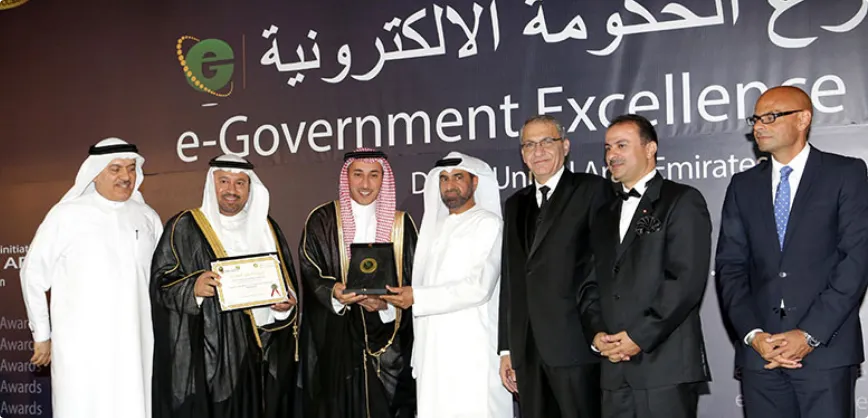
E-Government Shield Award

The Royal Commission for Riyadh City was awarded the e-Government Shield and the Certificate of Excellence within the competitions of the fifth session of the “e-Government Shield Award” competition, in which the Commission’s website www.rcrc.gov.sa won the Interactive Creativity Award in the category of websites of official agencies and departments in the Kingdom of Saudi Arabia, from Among 700 participating sites from various Arab countries, which were filtered through 3 stages of evaluation, of which only 35 sites won the prize.

The award was launched in cooperation between the Internet Awards Academy in the Arab region and Arab Organization for Social Responsibility (an organization of the League of Arab States), and the Economic and Social Commission for Western Asia (a United Nations organization) developed and approved criteria for selecting the best government websites. The award aims to distinguish the efforts of Arab governments that have established websites on the Internet, to provide information, transparency, and services for citizens and residents.

This site is registered on wpml.org as a development site.
